
Endometriosis Stretches: Why "Legs Up the Wall” Can Help More Than Lying in Bed
When endometriosis pain hits, most people default to bed.
Heat. Painkillers. Stillness. Endure.
And sometimes? That’s valid.
But for a specific pattern of endometriosis pain — the deep, heavy, dragging ache — lying flat may not be the most effective strategy.
Sometimes, changing the physics of the pelvis changes the pain.
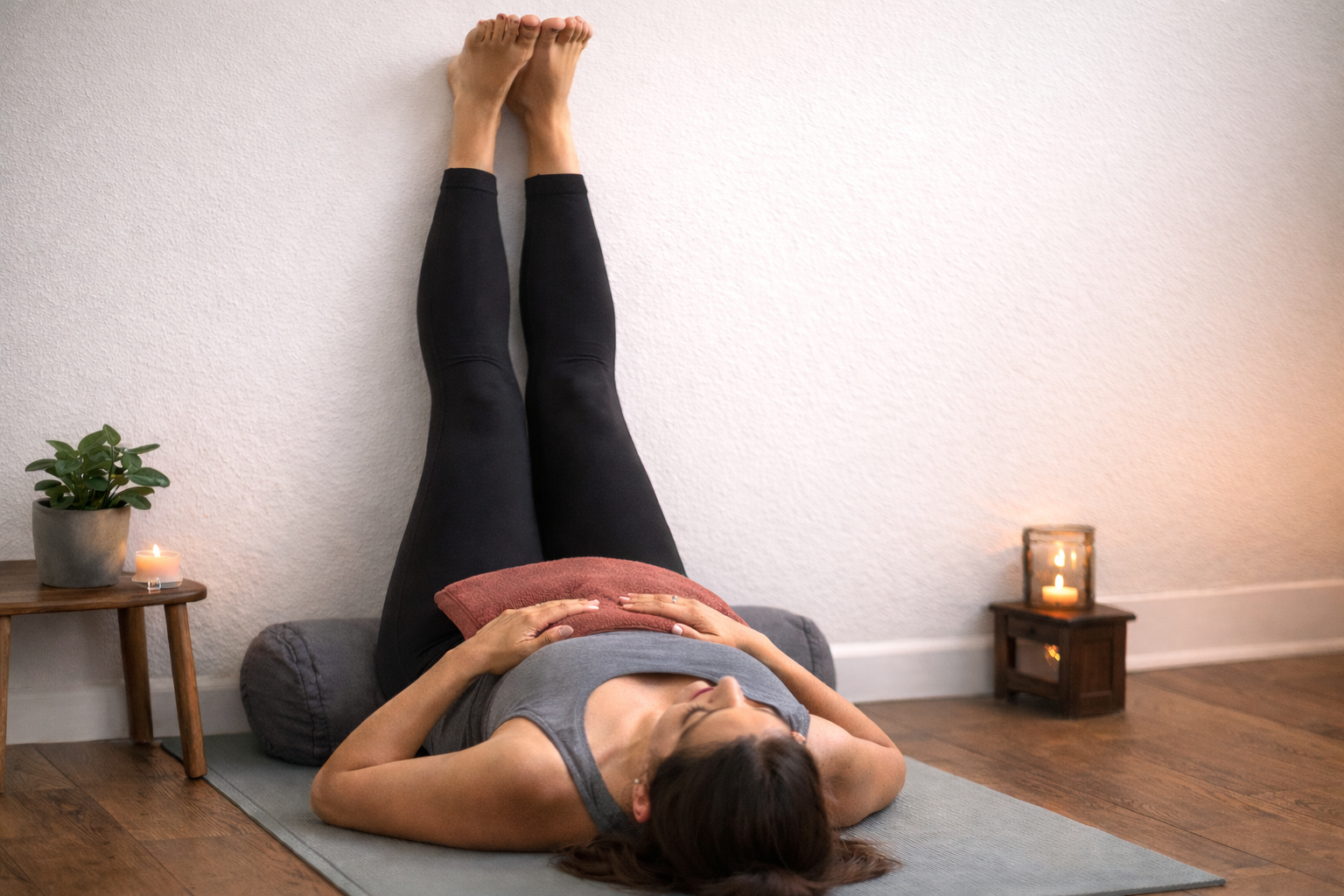
This is where legs up the wall (also known as Viparita Karani) becomes more than “just yoga.” It becomes a vascular, neuromuscular, and nervous system intervention.
The Overlooked Mechanism: Pelvic Congestion in Endometriosis
Endometriosis lesions release inflammatory chemicals — including prostaglandins and other immune messengers — that drive pain and swelling.
Add to that:
- Hormone-related fluid shifts (especially in the second half of your cycle)
- Chronic pelvic floor tightening
- Scar tissue (adhesions) limiting normal movement
- Shallow breathing from bracing against pain
In some people, this combination may contribute to increased pressure and reduced fluid movement in the pelvis.
And that can feel like:
- A deep, heavy ache
- A sense of fullness or pressure
- Pain that worsens as the day goes on
- Pain that gets worse after standing for long periods
- Some relief when lying down
This pattern overlaps with what doctors describe in conditions involving pelvic vein congestion.
Not all endometriosis pain works this way.
But if your pain feels “heavy and full” rather than sharp and stabbing, read on.
How Legs Up the Wall Changes the Physics
When you lie flat in bed, your pelvis stays level with your heart.
That means gravity isn’t helping move blood and fluid out of the pelvic area.
If your pelvis is already inflamed and swollen — which can happen with endometriosis — that pressure can just sit there. And that heavy, dragging feeling? It sticks around.
Now change the angle.
When you lift your legs above your heart, gravity starts working for you instead of against you.
In medicine, doctors use leg elevation all the time to:
- Reduce swelling
- Improve circulation
- Lower pressure in veins
It’s simple physics.
Applied to endometriosis pain, elevating your legs may:
- Reduce that “congested” feeling in the pelvis
- Ease pressure from pooled blood and fluid
- Decrease the tension signals being sent to your nervous system
In simple terms?
Lifting your legs can lower pressure.
And for some, pressure is exactly what’s driving the pain.
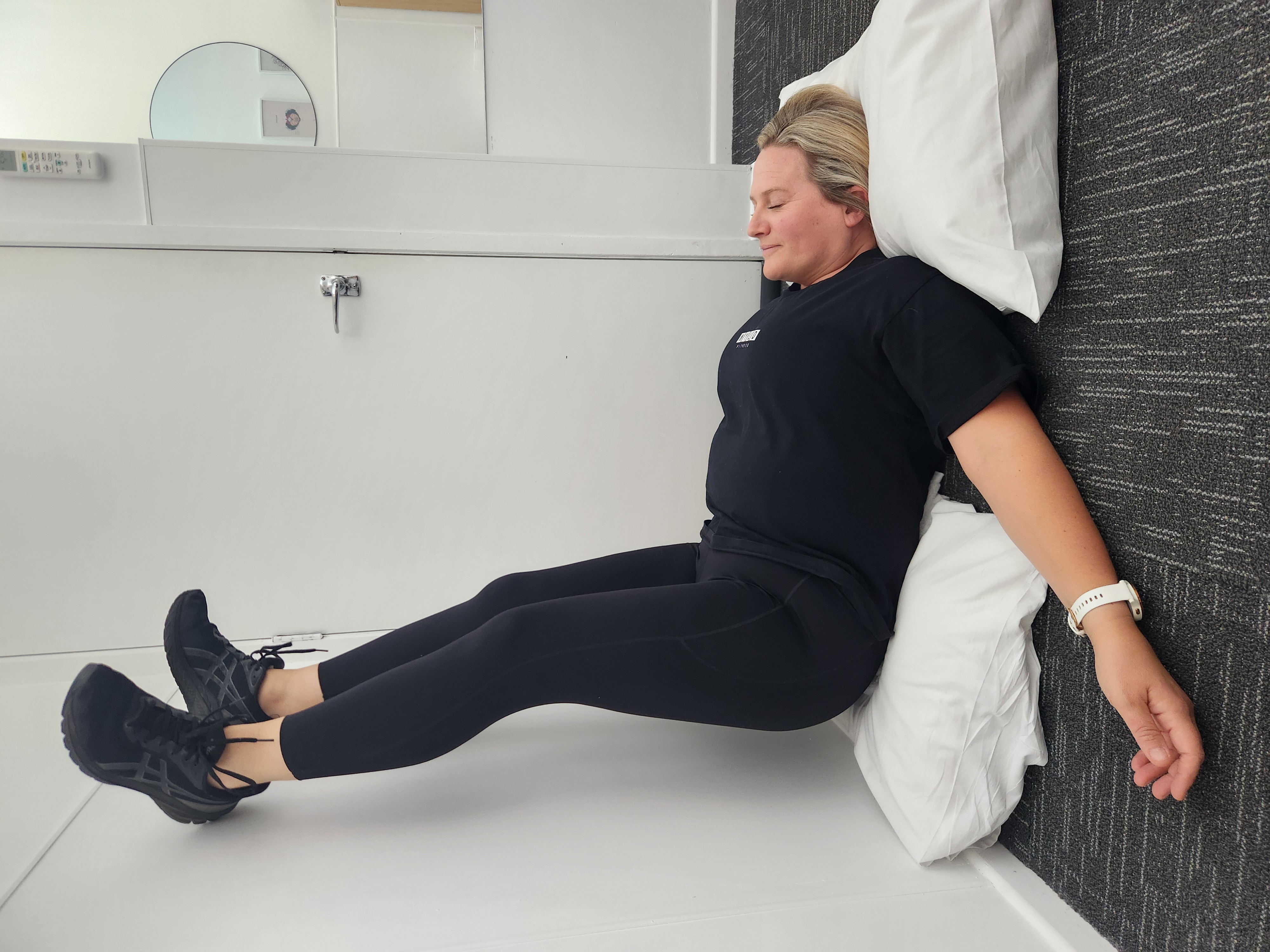
Supported legs up the wall relaxation
The Pelvic Floor Layer: Breaking the Guarding Loop
When you’re in pain, your nervous system hits the accelerator.
You might notice:
- Short, shallow breathing
- Increased heart rate and blood pressure
- Tightening through the abdomen and pelvis
This is called guarding — a normal protective response.
If this happens repeatedly, your body may learn the pattern.
It may start to anticipate pain… and runs this response on autopilot:
Pain → tension → more pain
Positions like Legs Up the Wall help shift your body into relaxation.
It’s like tapping the brake — telling your nervous system:
You’re safe. You can slow down.
When you add simple “pelvic drop” cues (soften your sit bones, unclench your jaw, relax your tongue), your body receives a safety signal.
Less guarding.
Less pressure.
Less amplified pain.
This is one reason pelvic floor relaxation is such a key part of chronic pelvic pain treatment.
The Nervous System: Central Sensitization & Autonomic Balance
Endometriosis is increasingly understood as involving central sensitization — meaning the nervous system becomes more sensitive to pain over time.
Many endo warriors live in chronic “fight-or-flight” mode.
Stress response becomes the default.
Slow diaphragmatic breathing has been shown to:
- Increase vagal tone
- Improve heart rate variability
- Reduce stress-system activation
- Lower perceived pain intensity
Your diaphragm also helps move fluid through the body. Deep, 360° breathing creates gentle pressure changes that support circulation and lymphatic flow.
When legs up the wall is paired with:
Inhale 4 seconds
Exhale 6–8 seconds (longer exhale than inhale)
You’re not just stretching.
You’re:
- Calming your nervous system
- Supporting circulation
- Reducing muscle tension
Add Heat: A Simple, Evidence-Informed Upgrade
Heat therapy has been shown to provide relief comparable to NSAIDs in studies on menstrual cramps.
Heat:
- Increases local blood flow
- Reduces muscle tightness
- Improves tissue flexibility
Adding heat to your lower abdomen or lower back while in this position can enhance both muscle relaxation and circulation.
Layering mechanisms = better relief.
The 10–20 Minute Endometriosis Flare Protocol
If your endometriosis pain feels heavy, pressure-based, or “full”:
- Sit close to a wall and lie back.*
- Move your hips 4–8 inches from the wall.
- Place a pillow or folded blanket under your hips.
- Rest your legs comfortably up the wall (no forcing).
- Apply heat to your lower abdomen or lower back.
- Inhale for 4 seconds.
- Exhale for 6–8 seconds.
- Soften your jaw, tongue, and pelvic floor.
- Stay for 10–20 minutes.
*If you have mobility issues or prefer an alternative option:
- Lie on the floor with legs rested up onto the couch.
- Or in supine supported butterfly.
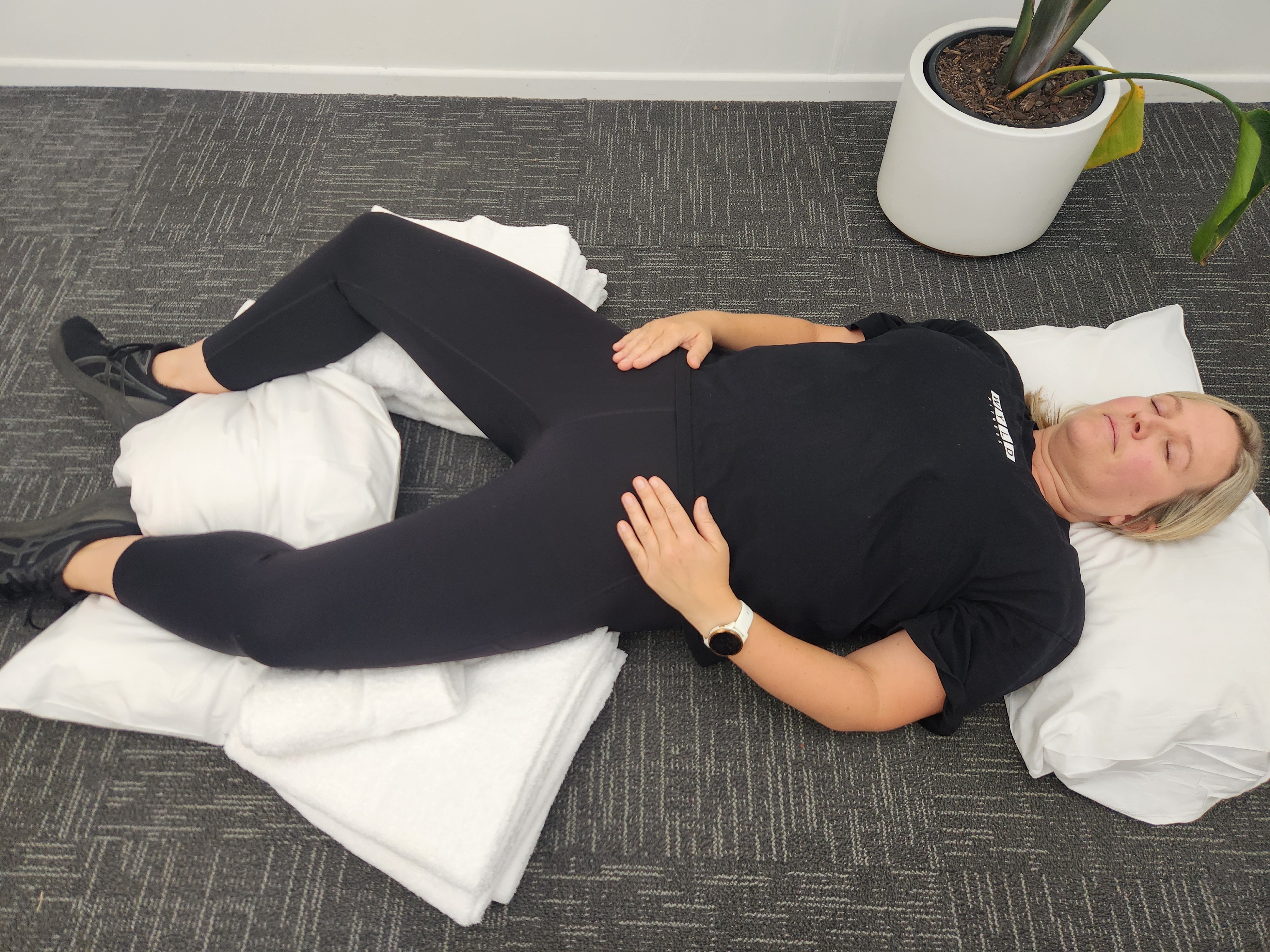
Supported Supine Butterfly Pelivc Relaxation.
During heavier, more congested days, you can add compression support.
Compression wear (like socks or targeted abdominal/waist support) works by applying gentle, consistent pressure to the lower abdomen and pelvic region.
Why this matters:
- Encourages blood to move out of congested areas
- Reduces venous pooling
- Eases that dragging, heavy sensation
- Supports overall circulation + fluid balance
Legs Up the Wall - How to Safely Practice for Ultimate Comfort - YouTube
Tap to unmute
Legs Up the Wall - How to Safely Practice for Ultimate Comfort Darcie Clark Yoga
Darcie Clark Yoga3.94K subscribers
The Bigger Picture
Endometriosis pain is:
- Inflammatory
- Vascular
- Neuromuscular
- Nervous-system driven
The most effective symptom modulation strategies often touch multiple domains at once.
So next flare? Don’t just endure it.
Elevate.
Breathe.
And if it helps — build it into your EndoFit protocol and track it inside the Endo45 app.
Because surviving is reactive. Thriving is informed.
And position?
It might be your missing lever. 💛
Frequently Asked Questions About Legs Up the Wall for Endometriosis
Does legs up the wall really help endometriosis pain?
It may help certain types of endometriosis pain — especially pain that feels heavy, full, or pressure-based. This type of pain may have a vascular or pelvic floor component. It is less likely to help sharp, stabbing, or adhesion-driven pain.
Why would elevating your legs reduce pelvic pain?
Elevating the legs above heart level assists venous return and reduces hydrostatic pressure in the pelvic vessels. For some individuals, lowering pelvic congestion may decrease pressure-related pain and discomfort.
How long should you stay in legs up the wall during an endometriosis flare?
Most people test 10–20 minutes, ideally combined with slow diaphragmatic breathing (longer exhale than inhale) and optional heat therapy. Tracking your response helps determine if it works for your pain pattern.
Is legs up the wall safe for everyone with endometriosis?
It may not be appropriate for individuals with uncontrolled hypertension, certain eye conditions, acute spinal injuries, or immediate post-surgical recovery. If you’re unsure, consult your healthcare provider before trying inversion-based positions.
Is legs up the wall a natural treatment for endometriosis?
It is a non-pharmacologic, low-risk pain management strategy that may support symptom relief in some individuals. It does not treat endometriosis lesions or cure the condition, but it may help modulate certain pain mechanisms.
How do I know if this strategy is working for me?
If your pain decreases within 10–20 minutes, feels lighter afterward, or reduces your need for additional medication, it may be beneficial for your specific pain subtype. Tracking patterns inside a symptom tracker like Endo45 helps you identify whether positional interventions consistently improve your EndoFit™ Score.
Reference List
Akin, M. D., Weingand, K. W., Hengehold, D. A., Goodale, M. B., & Hinkle, R. T. (2001). Continuous low-level topical heat in the treatment of dysmenorrhea. Obstetrics & Gynecology, 97(3), 343–349. https://doi.org/10.1016/S0029-7844(00)01173-7
Busch, V., Magerl, W., Kern, U., Haas, J., Hajak, G., & Eichhammer, P. (2012). The effect of deep and slow breathing on pain perception, autonomic activity, and mood processing—An experimental study. Pain Medicine, 13(2), 215–228. https://doi.org/10.1111/j.1526-4637.2011.01324.x
Eberhardt, R. T., & Raffetto, J. D. (2014). Chronic venous insufficiency. Circulation, 130(4), 333–346. https://doi.org/10.1161/CIRCULATIONAHA.113.006898
FitzGerald, M. P., Payne, C. K., Lukacz, E. S., et al. (2013). Randomized multicenter trial of pelvic floor muscle therapy in chronic pelvic pain. Journal of Urology, 189(1 Suppl), S75–S85. https://doi.org/10.1016/j.juro.2012.11.018
Stratton, P., & Berkley, K. J. (2011). Chronic pelvic pain and endometriosis: Translational evidence of the relationship and implications. Pain, 152(3 Suppl), S63–S74. https://doi.org/10.1016/j.pain.2010.06.018
Related Articles

Endometriosis Surgery: 5 Things I’d Know Before My First Surgery
How to give your first endometriosis surgery the best possible foundations.
Read the full article →
.svg)
Alcohol and Endometriosis: 5 ways drinking may be making endo worse
Alcohol and endometriosis may be more connected than you think. Learn how drinking can increase inflammation, disrupt estrogen, worsen pain, and trigger flares — and why reducing it may help.
Read the full article →

New NHS Endometriosis Tests: What They Mean for Early Diagnosis
NICE has recommended two new non-invasive endometriosis tests, EndoSure and Endotest, for early NHS use. Here's what they mean for diagnosis, primary care, and why New Zealand should be paying attention.
Read the full article →
Free 7-Day Endo Science Series
Understand why your symptoms happen — and what science shows can help improve them.
Join the waitlist for a free 7-day introduction to the EndoFit™ approach - direct to your inbox.
Free. Unsubscribe anytime.