
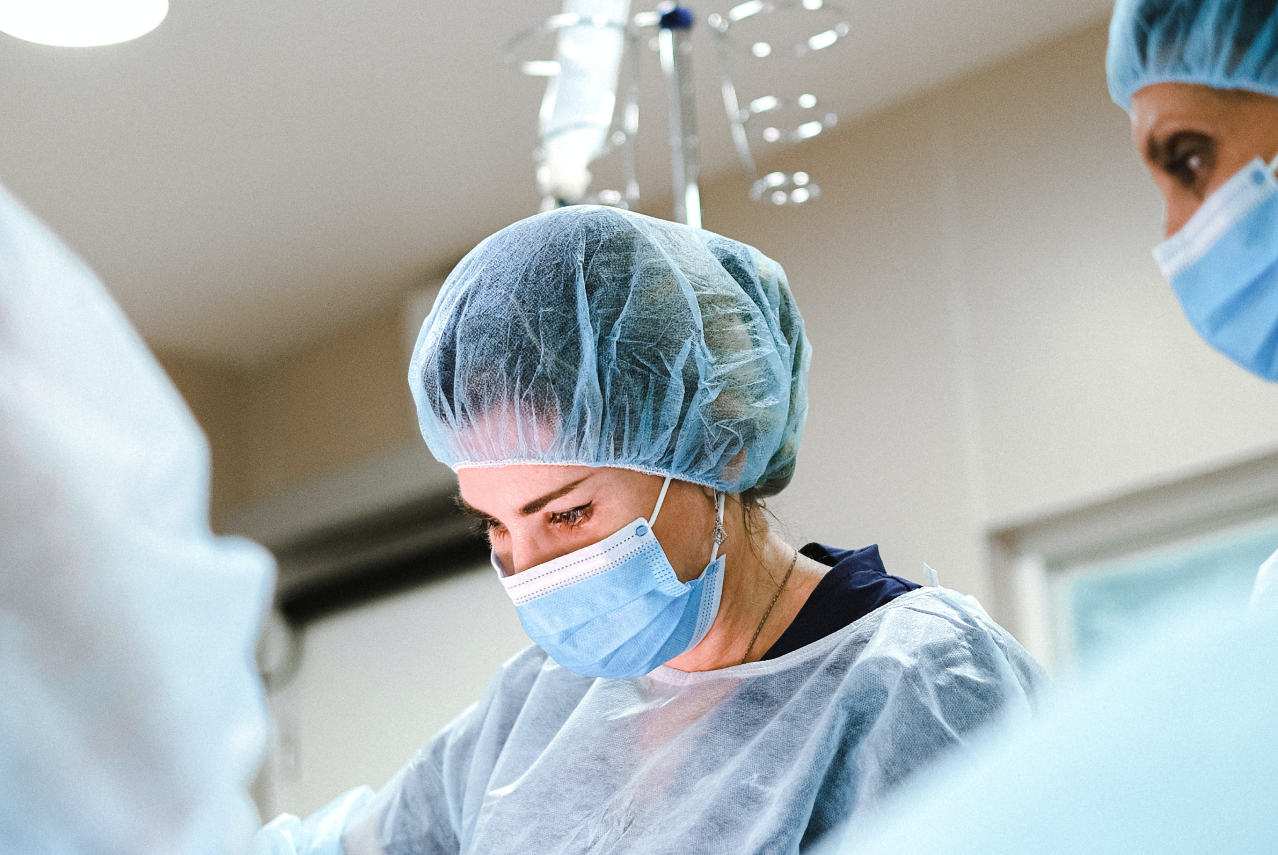
Ten years ago, I had surgery for Stage IV endometriosis. I haven't needed another endometriosis surgery since.
And no, I'm not going to tell you that's because I found one magical surgeon, supplement, diet or secret endometriosis protocol. Endometriosis doesn't work like that.
But looking back, there are things I now believe are very worth knowing before your first endometriosis surgery. Because surgery is a big deal.
And if you're going to put your body through it, you deserve to walk into that operating room informed, prepared and asking better questions.
First, the reality of endometriosis surgery
Endometriosis affects an estimated 10% of reproductive-age women globally — around 190 million people. In the United States, the Office on Women's Health estimates it may affect more than 11% of American women aged 15–44.
Surgery is one treatment option. It can remove endometriosis lesions, divide adhesions and, for many people, reduce endometriosis-associated pain. But surgery isn't a guaranteed reset button.
ESHRE's endometriosis guidance makes this pretty clear: surgery can relieve pain, but symptoms may improve only partially or temporarily for some people.
And here's a statistic worth knowing. ACOG says up to 8 in 10 women may experience pain again within two years after endometriosis surgery. That's recurrent pain — not necessarily confirmed recurrent disease or another operation — but it makes one thing very clear:
Surgery deserves a plan. Not just a date in your calendar.
So if I were preparing for my first endometriosis surgery again, these are the five conversations I'd want to have.
1. Don't just ask, “Are you a gynecologist?” Ask how much endometriosis surgery they actually do.
This would be my first question. Because endometriosis isn't always sitting conveniently on the surface of the pelvis waiting to be removed.
It can involve the ovaries, bowel, bladder, ureters and other structures. Deep endometriosis can make surgery considerably more complex.
ESHRE recommends referral to a center of expertise when deep endometriosis is suspected and surgery may be difficult.
So I'd want to know:
- How frequently do you operate on endometriosis?
- Do you routinely treat deep endometriosis?
- What happens if you find bowel, bladder or ureter involvement?
- Do you work alongside colorectal or urological surgeons when needed?
- What happens if you discover more extensive disease than imaging suggested?
That's not being a “difficult patient.” That's informed consent.
Don't choose your endometriosis surgeon based only on the word gynecologist after their name. Choose based on whether their experience matches the disease they may need to treat.
2. Map what you can before anyone operates
One of the biggest changes in endometriosis care is that surgery is no longer the only way clinicians can gather useful information about disease before treatment.
Specialist transvaginal ultrasound and MRI can help identify and map some forms of endometriosis — particularly deep disease — before surgery.
NICE recommends specialist transvaginal ultrasound or pelvic MRI to investigate deep endometriosis and assess its extent. Its updated guidance also emphasizes earlier use of transvaginal ultrasound in people with suspected endometriosis.
But here's the important bit: A normal scan does not automatically mean no endometriosis.
NICE specifically warns against excluding endometriosis simply because the examination and ultrasound are normal. So don't think of imaging as: “Can this prove whether I have endo?”
Think: “What can we learn before surgery so my team is less likely to be surprised once they're in there?”
3. Ask exactly what they plan to do when they find endometriosis
This conversation matters. A lot.
Before surgery, I would ask: “When you find endometriosis, what are you planning to do with it?”
- Will they treat lesions during the same operation?
- What techniques might they use?
- What can't they safely treat?
- Could disease be deliberately left behind?
- What would make them stop and schedule another procedure instead?
You'll see huge claims online that one surgical technique is always the answer. Real life is more nuanced.
The type and location of disease matter. Fertility goals matter. Ovarian reserve can matter. The organs involved matter. And the risks of removing disease matter.
The goal isn't to walk into your consultation demanding one technique you discovered on Instagram. The goal is to understand your surgeon's plan and why they're recommending it for your body.
There is also an important fertility conversation here. If surgery involves an ovarian endometrioma, ESHRE specifically advises that patients understand surgery can potentially damage ovarian tissue.
So if future fertility matters to you, say that. Out loud. Before surgery.
4. Ask the “what if?” questions while you're still fully dressed
Seriously. This is not the conversation you want to discover you should have had after waking up.
Ask:
- What if you find bowel endometriosis?
- What if it's on my bladder?
- What if there are dense adhesions?
- What if you find an endometrioma?
- What if the disease is more extensive than expected?
- Is the expertise needed to treat it available that day?
- Would you treat it? Leave it? Call another surgeon? Stage the procedure?
There can be very good medical reasons not to attempt everything during one operation.
But there is a difference between a deliberately staged surgery and discovering afterwards that another operation may be necessary because the right expertise wasn't available.
You deserve to understand the possibilities beforehand.
Good surgery isn't just what happens once you're unconscious. A huge part of it is the planning that happens while you're awake.
5. Stop treating the operation as the finish line
This might be the biggest lesson from my own last decade.
My surgery mattered enormously. But I don't believe my story ends with:
“I had surgery and that fixed everything.”
After endometriosis surgery comes recovery.
Then comes the much longer job of understanding your body, monitoring symptoms, rebuilding strength and deciding with your healthcare team what ongoing management makes sense for you.
Current ESHRE guidance says hormonal treatment may be offered after surgery because it can improve pain outcomes in people who aren't trying to conceive immediately.
That's an individual medical decision. But the broader lesson applies to almost everyone:
- Have a post-surgery plan.
- Know what recovery should look like.
- Know what symptoms your surgical team wants you to report.
- Know when you're being reviewed.
- Know what your longer-term treatment options are.
- And start noticing what your body does next.
What I did differently after my Stage IV endometriosis surgery
This is where the next part of my story begins. Because I've now gone ten years without needing another endometriosis operation. I'm incredibly grateful for that.
But I don't use my experience as proof that everyone can prevent another surgery by copying me.
I use it as proof of something else: There may not be one magic answer. But there are still things we can control.
For me, the years after surgery became an experiment in understanding my body better.
- What affected my pain?
- My energy?
- My gut?
- My sleep?
- My stress?
- My cycle?
- What helped?
- What didn't?
- What patterns kept appearing?
Small decisions started becoming habits. Habits gave me data. Data gave me clarity.
And clarity helped me make better decisions. That philosophy ultimately became Endo45.
Your endometriosis surgery checklist: 5 questions to save
If surgery might be ahead of you, take these five questions into your next appointment:
1. How much surgery do you perform on endometriosis like mine?
2. Should we do specialist ultrasound or MRI to map suspected disease beforehand?
3. What exactly will you do with endometriosis you find?
4. What happens if bowel, bladder, ureter or other complex disease is discovered?
5. What is our recovery and longer-term management plan after surgery?
That's it. Five questions. Much better than 47 open browser tabs at 1 a.m.
Ready to stop guessing?
Inside Endo45, we help you connect the dots between your symptoms, cycle, lifestyle and wellbeing, measure progress and work out your next best step.
If surgery is part of your journey, use the app alongside your healthcare team to start building the picture before and after your operation.
Because health happens between appointments too.
References
- World Health Organization. Endometriosis. Updated October 2025. Endometriosis affects an estimated 10% — approximately 190 million — reproductive-age women worldwide.
- U.S. Office on Women's Health. Endometriosis. Updated October 2025. Estimates endometriosis may affect more than 11% of American women aged 15–44.
- American College of Obstetricians and Gynecologists. Endometriosis FAQ. Includes patient guidance on surgery, pain recurrence and ongoing treatment.
- NICE. Endometriosis: diagnosis and management (NG73), updated 2024. Guidance on ultrasound, MRI and assessment of deep endometriosis.
- European Society of Human Reproduction and Embryology. ESHRE Guideline: Endometriosis. Guidance on surgery, referral for deep disease and postoperative treatment.
- RANZCOG. Australian Living Evidence Guideline: Endometriosis. Published 2025.
This article is educational and isn't a substitute for individualized medical advice. Surgical decisions should be made with a qualified healthcare professional who understands your history, symptoms and goals.
Related Articles

Endometriosis Stretches: Why "Legs Up the Wall” Can Help More Than Lying in Bed
Legs up the wall for endometriosis pain is a positional strategy that elevates the pelvis above heart level to reduce venous pressure, relax the pelvic floor, and down-regulate the nervous system. It may help with heavy, congestive-type endometriosis pain.
Read the full article →
.svg)
Alcohol and Endometriosis: 5 ways drinking may be making endo worse
Alcohol and endometriosis may be more connected than you think. Learn how drinking can increase inflammation, disrupt estrogen, worsen pain, and trigger flares — and why reducing it may help.
Read the full article →

New NHS Endometriosis Tests: What They Mean for Early Diagnosis
NICE has recommended two new non-invasive endometriosis tests, EndoSure and Endotest, for early NHS use. Here's what they mean for diagnosis, primary care, and why New Zealand should be paying attention.
Read the full article →
Free 7-Day Endo Science Series
Understand why your symptoms happen — and what science shows can help improve them.
Join the waitlist for a free 7-day introduction to the EndoFit™ approach - direct to your inbox.
Free. Unsubscribe anytime.